Little Italy sits at the intersection of some of Manhattan's most walkable and historically layered neighborhoods - bordered by SoHo to the west, Chinatown to the south, and Nolita to the north. Staying here puts you within a short walk of multiple transit lines and a dense concentration of dining, galleries, and downtown landmarks, making it a genuinely strategic base for exploring Lower Manhattan without relying heavily on the subway.
What It's Like Staying in Little Italy
Little Italy today is a compact, walkable strip centered on Mulberry Street, where the neighborhood's Italian heritage is most visible - though the area has shrunk significantly over decades as Chinatown expanded northward. The streets are busy during lunch and dinner hours but quiet early in the morning, making it one of the calmer pockets of Lower Manhattan for light sleepers. Most guests staying here can reach Canal Street subway station on foot in under 10 minutes, connecting directly to the A, C, E, and 6 lines.
The surrounding blocks feel authentically New York rather than tourist-polished, and the density of food options - from Vietnamese and Chinese on Mott Street to Italian-American classics on Mulberry - is genuinely exceptional within a two-block walk of most accommodation. It suits travelers who want downtown access without paying SoHo or Tribeca premiums, but it's not the right pick for those who prioritize quiet residential surroundings or direct proximity to Midtown.
Pros:
- Walking distance to SoHo, Nolita, Chinatown, and the Lower East Side without needing transit
- Strong subway connectivity via Canal Street and Spring Street stations covering multiple lines
- Dense, walkable food and café culture directly on the doorstep
Cons:
- Mulberry Street sees significant foot traffic and noise on weekend evenings
- Midtown Manhattan is around 5 km north - not a walk-to destination
- Limited green space; the nearest significant park is City Hall Park, roughly 1.5 km south
Why Choose a Central Hotel in Little Italy
Central hotels positioned near or adjacent to Little Italy offer a practical downtown anchor - they place guests within reach of both the Financial District to the south and the creative corridor of SoHo and Tribeca to the west, without committing entirely to any single neighborhood's character. These properties typically sit in the 3- to 4-star range, offering a meaningful step up from budget accommodations while stopping short of the ultra-luxury pricing found in SoHo proper or the West Village. Room sizes in this zone trend larger than comparable Midtown options at similar price points, a trade-off that matters on longer stays.
The main practical advantage is multi-directional access: guests can walk south to One World Trade Center, east to the Lower East Side, or north into Nolita without a single subway ride. The trade-off is that this isn't a prestige address - Little Italy lacks the hotel density of Midtown, meaning fewer last-minute availability options and a quieter, more local atmosphere that not every traveler is seeking.
Pros:
- Strong value-to-location ratio compared to equivalent hotels in SoHo or Tribeca
- Multi-directional walkability covers several key Manhattan neighborhoods simultaneously
- Smaller hotel footprints often mean more attentive, less impersonal service
Cons:
- Limited hotel inventory means fewer last-minute options during peak periods
- Weekend night noise from restaurant and bar activity on Mulberry and Grand streets
- Not well-positioned for travelers whose primary focus is Midtown or Upper Manhattan
Practical Booking & Area Strategy
The most strategically positioned streets for hotels near Little Italy are Mulberry Street, Grand Street, and Bowery - all within the corridor that connects Canal Street to the north end of Nolita. Bowery in particular offers strong value, sitting just east of SoHo with direct access south toward Brooklyn Bridge (around 1 km away) and north into NoHo and the East Village. Canal Street subway station is a genuine hub here, handling the A, C, E, J, Z, N, Q, R, W, and 6 lines - a connectivity density rare in downtown Manhattan.
Little Italy draws peak crowds during the Feast of San Gennaro in September and sees consistent tourist pressure from spring through early fall. Book at least 6 weeks ahead for September stays, when the festival directly affects street access and ambient noise levels on Mulberry Street. The area is safe at night and well-lit, with active street life keeping the blocks lively without feeling threatening. Travelers focused primarily on Financial District business can walk to the World Trade Center complex in under 20 minutes from most properties in this zone, making it a viable alternative to staying in Lower Manhattan proper.
Key things to do within walking distance include the National September 11 Memorial & Museum, the streets of SoHo, the Tenement Museum on Orchard Street, and the Manhattan Bridge approach for Brooklyn access on foot. The New York City Hall and its surrounding civic architecture are reachable without transit in a short walk south.
Best Value Stays
These properties offer strong downtown positioning relative to their price point, with amenities that cover the practical needs of most travelers without unnecessary extras.
-
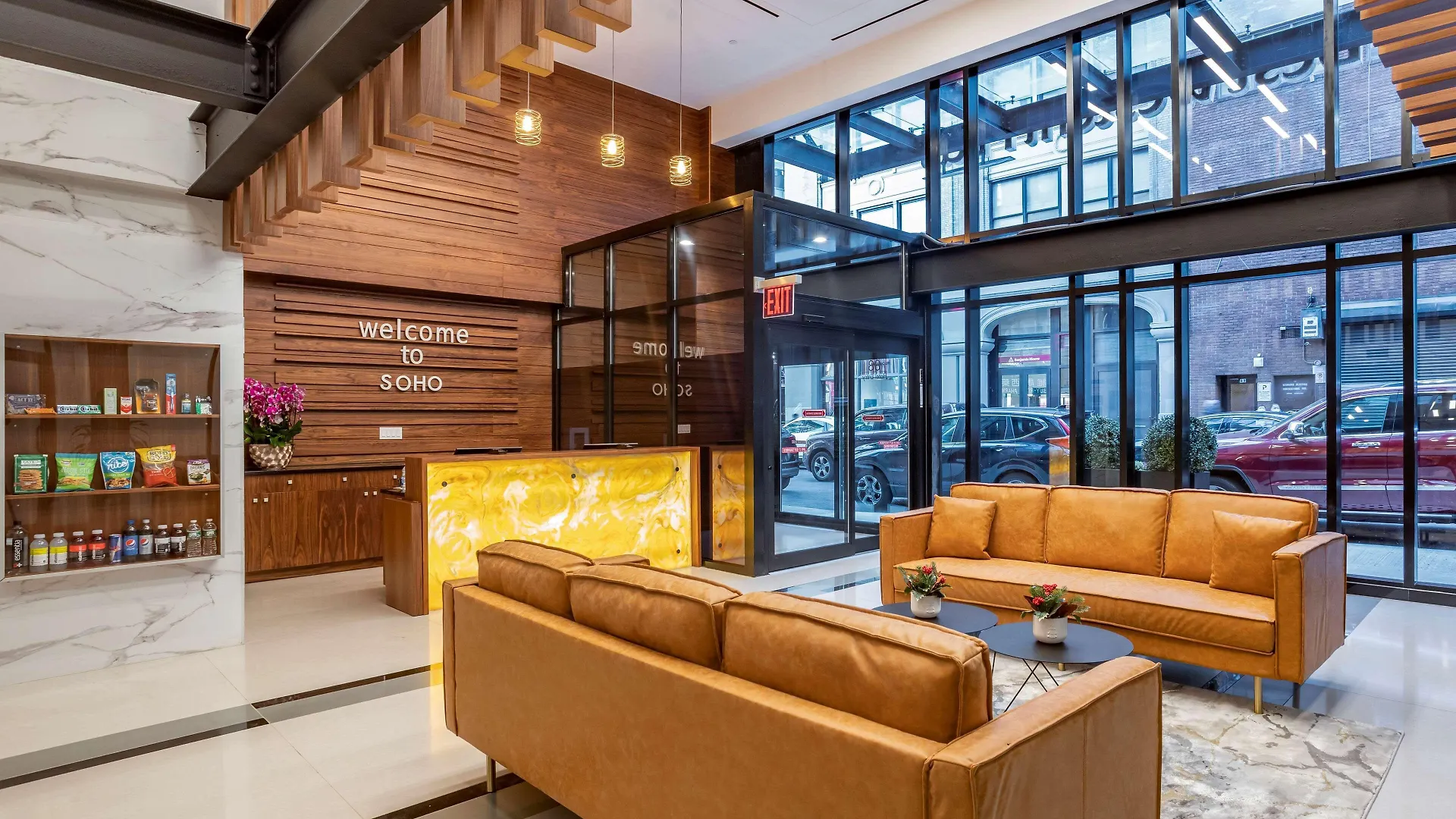
1. Best Western Plus Soho Hotel
Show on map


 Check-infrom 15:00 until 23:59Check-outuntil 11:00
Just a few rooms left at the best rate!
fromUS$ 152
-
2. Walker Hotel Tribeca
Show on map


 Check-infrom 15:00 until 23:59Check-outuntil 11:00
Just a few rooms left at the best rate!
fromUS$ 153
Best Premium Stays
These hotels bring stronger design credentials, branded restaurant concepts, and elevated room finishes to the Little Italy and lower Manhattan corridor - suited to travelers who want a more curated experience without relocating to Midtown.
-
3. 11 Howard, New York, A Member Of Design Hotels
Show on map


 Check-infrom 16:00 until 23:59Check-outuntil 11:00
Hurry – almost gone at this price!
fromUS$ 219
-
4. Hotel 50 Bowery, Part Of Jdv By Hyatt
Show on map


 Check-infrom 16:00 until 23:59Check-outfrom 06:00 until 11:00
Rooms filling fast – secure the best rate!
fromUS$ 140
Smart Travel & Timing Advice for Little Italy
Little Italy's peak tourist pressure runs from late May through early September, when Mulberry Street fills with outdoor dining and weekend foot traffic makes the blocks around Grand and Hester streets noticeably crowded by early evening. September is the hardest month to book due to the Feast of San Gennaro, which takes over Mulberry Street for around 11 days and drives accommodation demand across the entire lower Manhattan area. Prices for central hotels in this zone typically spike during the festival period, so booking well in advance - or deliberately timing a visit around it if the festival is appealing - is the clearest way to control costs.
Late October through November and the first half of March represent the best windows for lower nightly rates and thinner crowds, while still offering comfortable walking weather for exploring SoHo, Nolita, and the downtown waterfront. A stay of 3 nights is generally enough to cover Little Italy itself plus the surrounding neighborhoods on foot. Last-minute availability in this zone is limited given the low hotel density, so travelers without flexibility should book at least 4 weeks ahead for non-festival periods and 8 weeks ahead for any stay touching September.